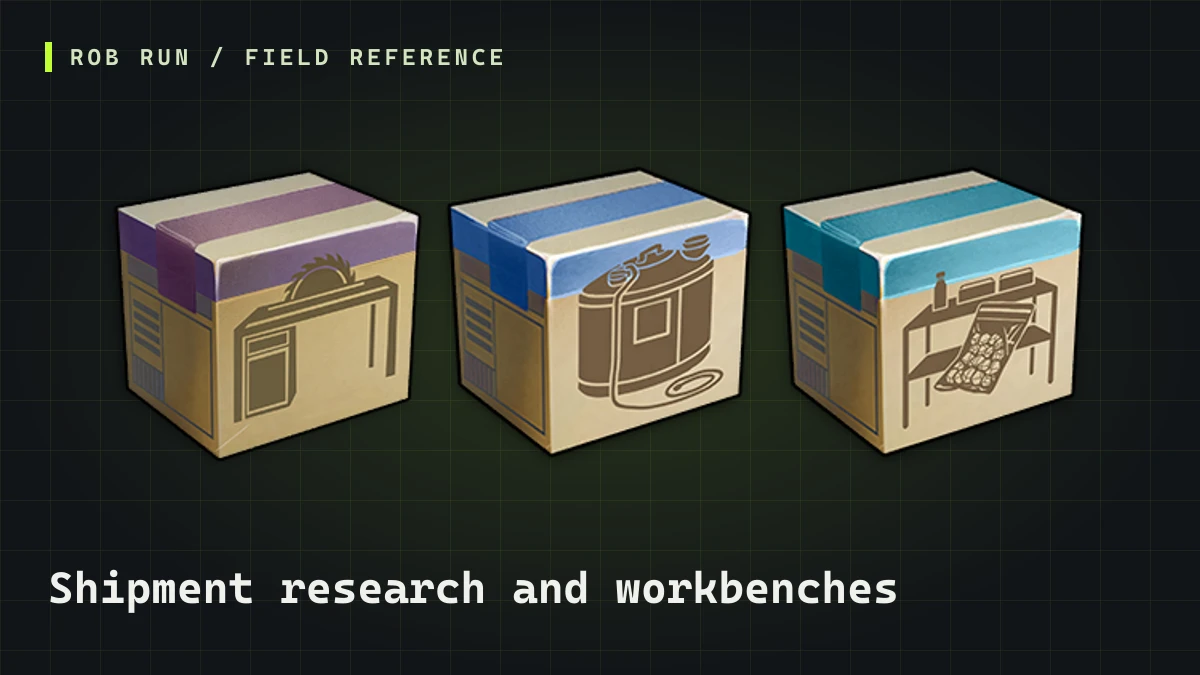
Why can you unlock something and still not own it?
The community shipment snapshot says items are researched first and then purchased through another interaction, described as a laptop. We have not independently verified the current interface or all exceptions. The important habit is to read what the button actually promises: access, research, purchase and delivery are not synonyms. Before paying, identify whether the action changes eligibility or provides a physical item. Do not assume an unlocked node is automatically in the inventory or placed on the plot.
What are the separate costs and gates?
| Stage | Question to answer |
|---|---|
| Eligibility | Does this require a district tier, document or accumulated progression? |
| Prerequisites | Which earlier nodes still need research? |
| Research | What exactly becomes available after this payment? |
| Purchase | How much does the usable copy cost, and where is it obtained? |
| Operation | Does it need ammunition, modules, ingredients, land or transport? |
| Recovery | Can you fund another basic outing if this copy is lost? |
| The snapshot describes tier and prison-term requirements for some nodes. We do not independently confirm current thresholds. Read the current lock text before assuming cash is the only obstacle. |
How does this change a weapon decision?
Compare a complete loadout rather than an isolated research label. A gun can require research, a usable copy, ammunition and supporting equipment. A higher variant might improve handling rather than raw damage; the weapon guide explains why suffixes do not establish a current performance ranking. If buying the upgrade leaves you unable to replace a cheaper kit, the improved weapon may reduce your ability to keep playing after failure. That is a budget trade-off, not proof the weapon itself is bad.
How does it change a production decision?
A machine research node does not supply land, the machine, its input or an accepting buyer. A partially funded chain can leave funds locked in unused equipment. Laboratory planning is a clear example because several processing stages are reported between the first input and the sale. List each required stage and confirm it is accessible before paying for the first expensive component. The first-base guide covers the separate property commitment. Do not treat advertised passive income as a substitute for checking the operating chain.
How should you confirm a purchase completed?
Read the result and inspect the relevant inventory, delivery or placement interface. Check the balance once, and preserve the message if it remains pending. Research completed and item delivered are different outcomes, so record which one you actually observed. If there is a transaction delay, do not keep pressing purchase. Follow errors and fixes and retain the time, amount and receipt where applicable. We do not promise that an absent item means you were never charged.
What is the smallest useful spending plan?
Write one goal: for example, perform a named locked-room job or complete a cargo sale. Add its required access, research, usable items and supplies. Keep an operating reserve separate. Then choose the next affordable step using shipment unlock order. Finally, check the time horizon. The reported reset system means an economic unlock may not be permanent across states. Do not build a long-term investment calculation from a current-state research icon until the client’s persistence rules are clear.
Editorial review: 27 November 2026. This is a source-based guide, not a claim of hands-on testing. Snapshot details may differ from the current client.