Why will the buyer not accept what you brought?
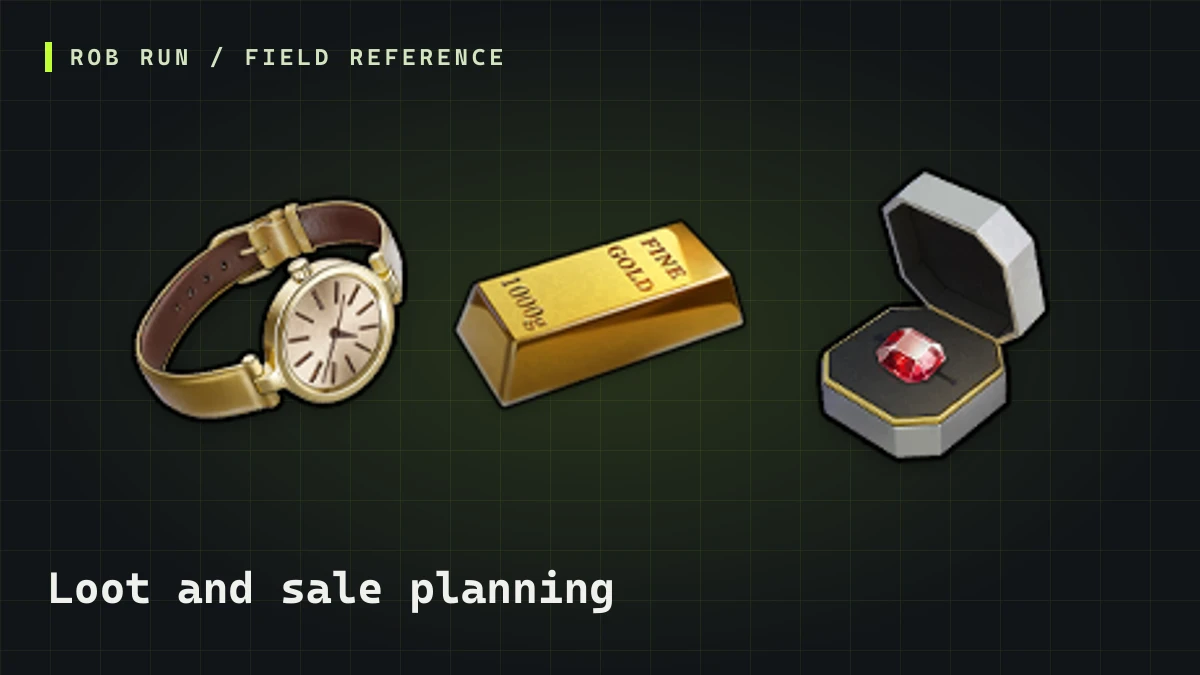
First identify the item category rather than trying every nearby counter. The community selling snapshot distinguishes ordinary stolen valuables from cargo. It names Fences for the former and Smuggler’s Vans for the latter. We have not independently confirmed current acceptance rules, so treat those names as places to check, not a promise that every item of a similar appearance qualifies. Read the item description, then the buyer’s acceptance and price window. A collection packed into a cargo crate may follow a different route from the loose valuables that produced it. Do not assume an unopened container can be sold exactly like its contents.
What is the practical sale decision tree?
| What you have | Snapshot route to inspect | Check before confirming |
|---|---|---|
| Loose stolen valuables | Fence | The correct item is selected and the offered amount is visible |
| Cargo or a completed cargo crate | Smuggler’s Van | The cargo appears in the buyer’s interface |
| Goods near your own district | Sales Center | Whether your plot or district grants access to that sale |
| Cash rather than merchandise | Money or banking interaction | Whether this is a deposit, laundering action or actual sale |
| This table is a navigation aid, not a current price sheet. The cargo guide explains the additional choice between selling, opening and processing a crate. |
How do you finish the sale without losing track of the payment?
- Confirm the correct goods and quantity before accepting.
- Read any displayed fee, bonus or eligibility restriction.
- Wait for the interaction to finish; do not assume a pending request succeeded.
- Check where the payment was delivered: account, inventory or an interactable payout.
- Verify the final balance before moving on. The snapshot warns about cash left on a counter after a sale. We have not retested that interaction, so inspecting the payout state is preferable to assuming every sale deposits money automatically. If a transaction remains pending, record it and use errors and fixes rather than repeatedly triggering the action.
Should you travel farther for a larger bonus?
Only after comparing the extra return with the extra exposure. The snapshot associates sale bonuses with Notoriety and location, but our editors have not independently confirmed the percentages, stacking rules or current mode bonuses. A longer trip can cost time, ammunition or the entire load. Compare the actual offers you can inspect, not a copied top-level price. For a new player, completing a reliable nearby route may be more useful than chasing the highest theoretical payout. Read loot loss before moving cargo across zones. A district buyer described as more profitable is not automatically safer than a city buyer.
What should you do with the proceeds?
Keep a replacement reserve before spending on research. The money guide separates cash flow, stored funds and investment, while shipment planning helps avoid unlocking something you still cannot afford to use. If an item may be a tool or recipe ingredient, compare its near-term purpose before selling it. The barter guide shows how to avoid selling an ingredient you need immediately. That does not mean hoarding everything: reserve named ingredients for a specific goal, not an unlimited speculative collection.
Editorial review: 27 November 2026. This is a source-based guide, not a claim of hands-on testing. Snapshot details may differ from the current client.